| HRMM HOME | Calendar | Lighthouses | Rondout | Steamboats | Age of Sail | Robert Fulton | Henry Hudson | Quadricentennial | Links | |
Add Your Name to the Museum's email Distribution List DONATE YOUR BOAT
|
Hudson River
Maritime Museum
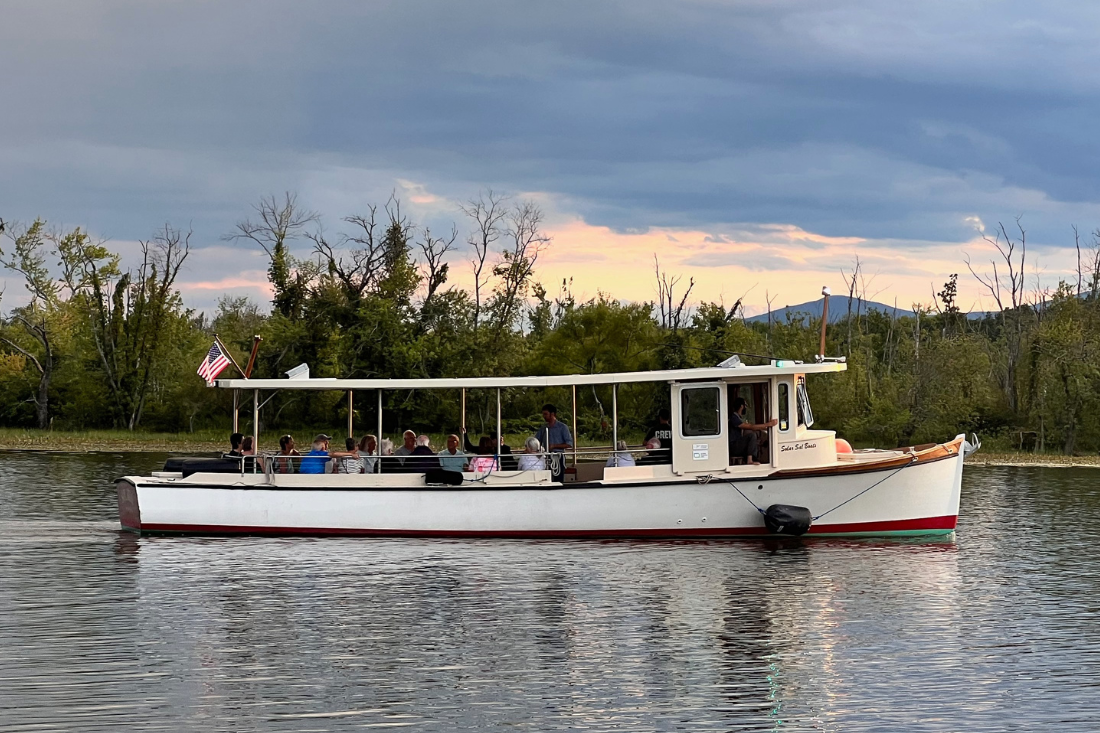
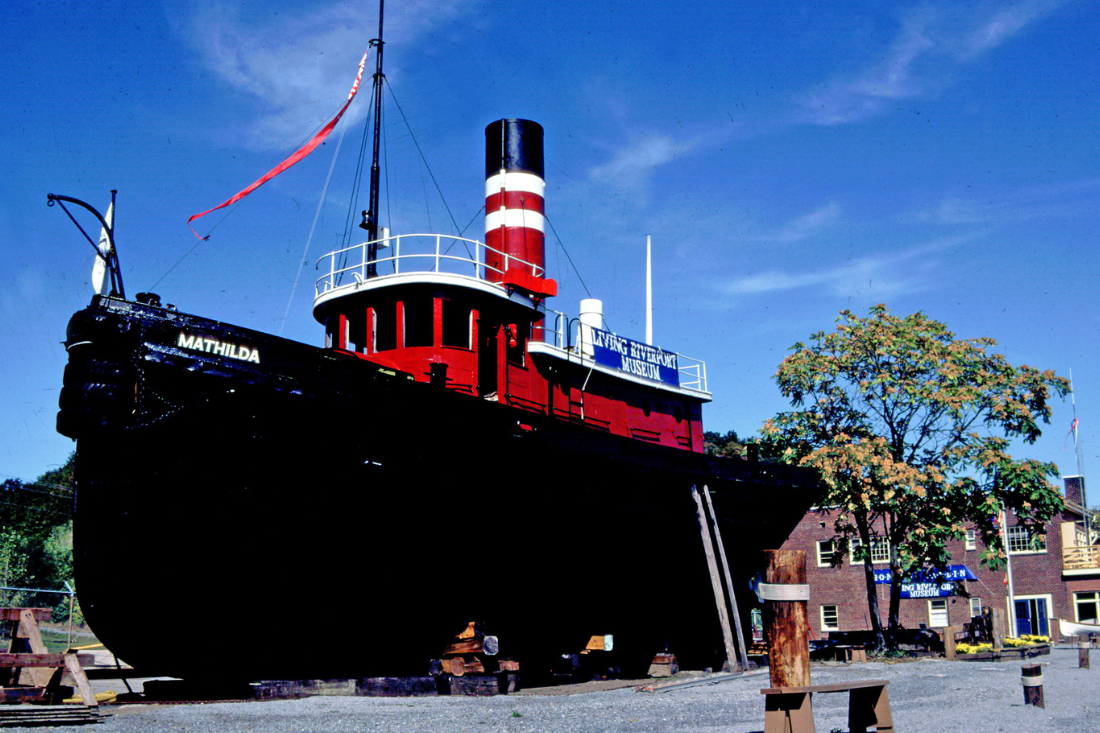
The Hudson River Maritime Museum is the only museum in New York State exclusively preserving the maritime history of the Hudson River, its tributaries, and the industries that developed around it. Indoor and outdoor exhibits on Hudson River maritime history, a gift shop, waterfront special events, and boat rides to the historic Rondout Lighthouse are available at the museum.
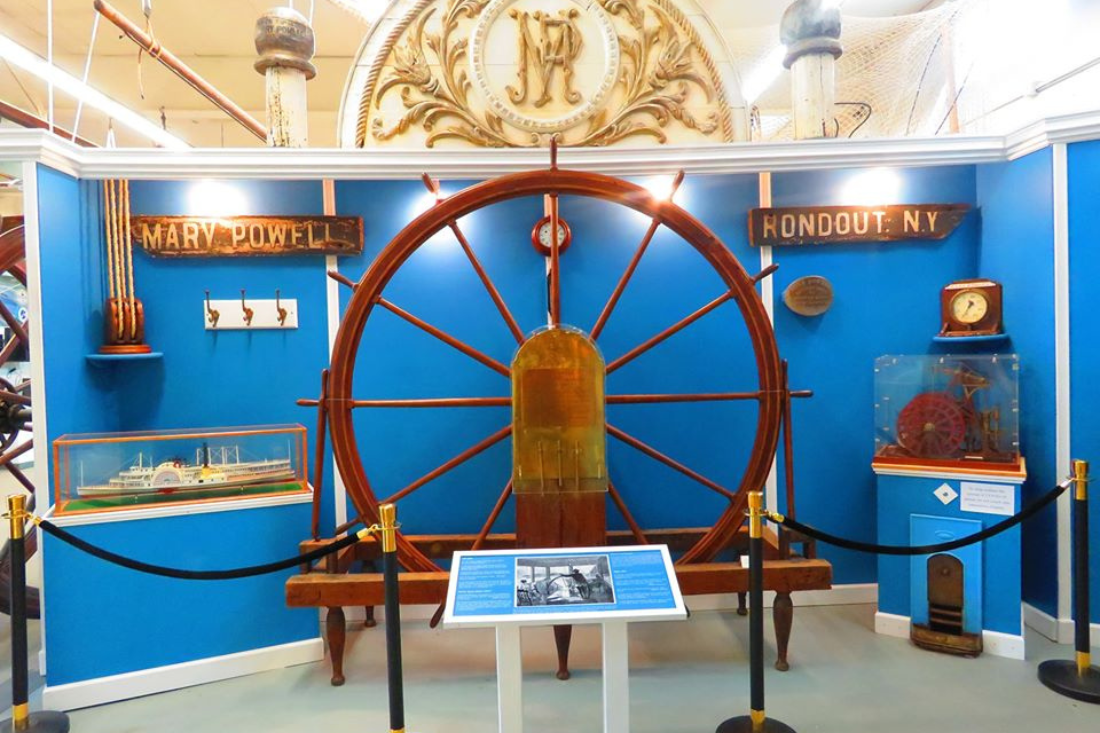
2008 EXHIBITS OPEN MAY 3RD 11AM The exhibition “HUDSON’S JOURNEY” will form the cornerstone for HRMM’s newly revised adult and children’s educational programming. Dedicated staff and volunteer artisans have faithfully recreated Henry Hudson’s “aft cabin” in the famous Half Moon exploratory vessel. This permanent exhibition space is now supplemented with various accoutrements used during Hudson’s voyage, an historical timeline, and murals depicting the Native Americans with whom Hudson and his crew interacted in 1609. A dugout canoe, crafted in the Lenape tradition, is on view as well as a fabulous 1909 “Half Moon” model on temporary loan to HRMM. Thomas Locker artwork provides a stunning view of the “River Which Runs Both Ways” as Henry Hudson must have seen from his “aft cabin.” “SMALL STEAMBOATS OF THE HUDSON” complements “Hudson’s Journey” by telling the history and role of small steamboats or “yachts” on the river. Archival photographs, maps, a working steam engine, along with key artifacts from HRMM’s permanent collection, demonstrate how these diminutive and beautiful short distance steamboats fulfilled a true public need -- travel and transport up and down the Hudson River and its tributaries. The HRMM gala opening reception is Friday , May 2, 2008 at 6:00 pm. Celebrate Shad - May 10th Festival, 11-6 PM. |
|||||||||||||||||||
|   |
| |||||||||||||||||||
|
Henry
Hudson and the Half Moon Henry Hudson's 1609 Ship of Discovery The original Half Moon (Halve Maen) was commissioned on March 25, 1609, for the Dutch East India Company. She was a ship of exploration designed to take a crew of twenty into unknown and uncharted waters. Her captain, Henry Hudson, was already a famous explorer of Arctic waters when in 1608 he was hired by the Dutch East India Company to find a Northeast, all-water route to Asia. The Half Moon sailed out of Amsterdam in April, 1609, and after a difficult journey along the coast of Norway, turned west and headed for warmer climes. On September 12, 1609, Hudson began his exploration of the river now named after him. This site documents Henry Hudson's voyage of discovery, the early Dutch history in the Hudson Valley, the Indian cultures Henry Hudson found on his voyage up the river. |
|||||||||||||||||||
|
Robert
Fulton, the Clermont and Other Early Steamboats Early History of Steamboats on the Hudson River
Commercial steamboating on the Hudson River began when Robert Fulton's steamboat ran from New York to Albany on August 14th, 1807. The trip to Albany was made in thirty-two hours and the return trip to New York took thirty hours. This was the first voyage of any considerable length made by a steamboat, and immediately following this demonstration, Fulton began regular trips began on the Hudson River. Steamboats introduced quick and reliable travel along the Hudson River. With the opening of the Erie, Champlain, and Delaware & Hudson Canals, steamboat traffic increased tremendously. The Erie Canal established New York City as a center of finance and shipping, provided cheap transportation for Midwestern farm products, and provided easy passage for immigrants to the Great Lakes Region. The Delaware & Hudson Canal supplied Pennsylvania Anthracite coal to New York City, and established Rondout as a center for Hudson River tow boats. |
|||||||||||||||||||
![]() |
Steamboats
of the Hudson River History of Steamboats on the Hudson River Available on this site are chapters describing the early developments of steamboats and the history of steamboats in New York and on the Hudson River. Steamboat days were romantic and travel was adventure. Transportation was a highly competitive business and men struggled to win and maintain place. This hectic competition was a glorious game which helped to advance travel. New lands were conquered and great cities built where steamboats reached, and the nation halted in its pursuit of agriculture to enter upon the mechanics and engineering of steamboating. |
|||||||||||||||||||
|
Hudson
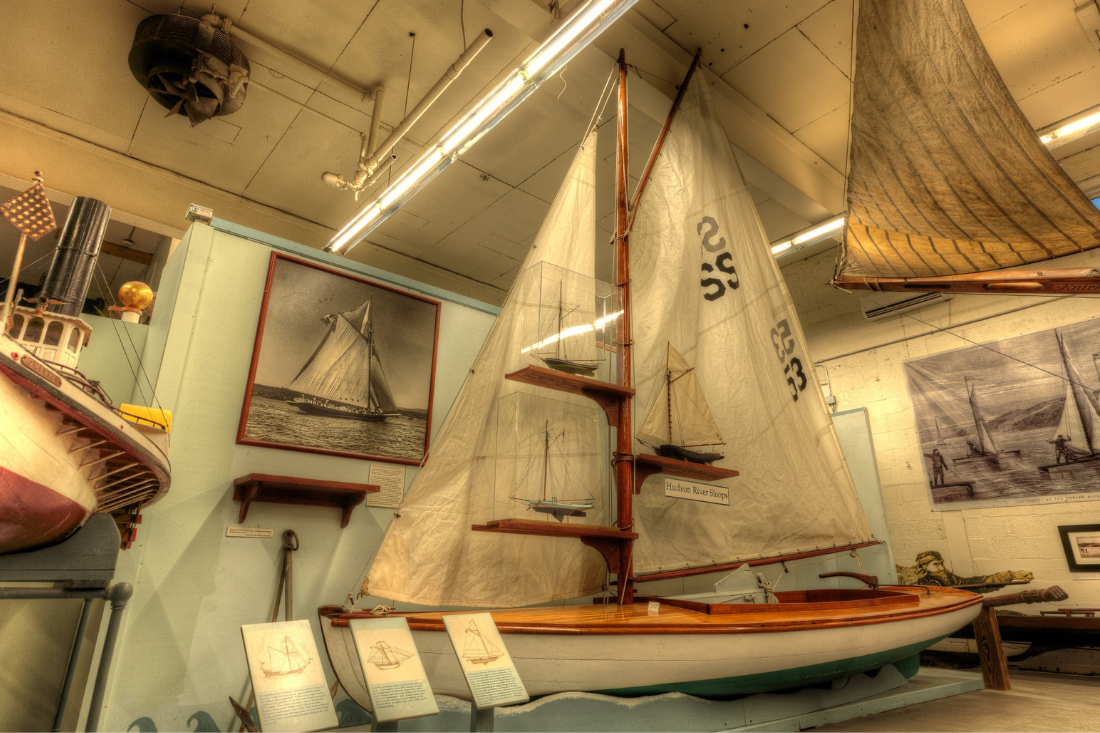
River Sloops and the Age of Sail History of the Hudson River Sloop The most famous sailing vessel to ply the waters of the magnificent Hudson River was undoubtedly the Hudson River sloop of the 19th century. This incredible hybrid craft evolved from its early European ancestors, built by the Dutch and the English, into a ship specifically suited to the demands and quirks of the namesake waterway. The sloop was the forerunner in the establishment of the vast commerce on the Hudson which reached an extent that was exceeded by few, if any, rivers in the world. This vessel played an important a part in the development and growth of the State of New York, particularly in connection with the Erie Canal, causing the city of New York to rise to be the chief city of the United States. |
|||||||||||||||||||
|
Rondout
Lighthouse History of the Rondout Lighthouse The current Rondout Lighthouse is actually the third lighthouse built at the mouth of the Rondout Creek. The first Kingston Lighthouse was built in 1837. This wood structure became badly damaged by ice and weather and soon became unsafe. A second lighthouse of brick and stone was constructed in 1867 on the south side of the creek, but abandoned in 1915. In 1913 construction started on a new lighthouse, which is the structure known to area residents today as the Rondout Lighthouse. The largest and last 'family' light built on the Hudson River, the third Rondout Lighthouse was first lit on August 25, 1915. Two events figured prominently in the growth and expansion of waterborne commerce on the Hudson. The first was the invention by Robert Fulton of a practical steamboat that successfully traveled the Hudson from New York City to Albany in 1807. The second event was the completion of the Delaware & Hudson Canal in 1828. The steamboat revolutionized river transportation by dramatically decreasing the length of time required for both passengers and cargo to reach New York City markets. The completion of the D&H Canal by the Wurts brothers led to a sizable growth in commercial activity at the river port community known as Rondout. The burgeoning maritime activity necessitated the building of a lighthouse at the mouth of the Rondout Creek to warn captains of the dangers of the shore and the shallow tidal fiats. |
|||||||||||||||||||
|
The
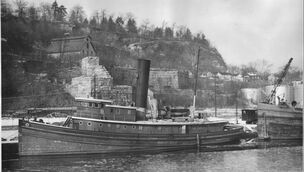
Rondout Kingston's Historic Waterfront District Soon after Henry Hudson's 1609 trip up the Hudson, a trading post was established at Esopus for the Dutch East India Company's fur trading endeavors. The name Rondout stems from the Dutch word reduyt or redoubt which means fort. The development of the Delaware & Hudson Canal in 1828 transformed the Rondout Valley into the principal center of commercial activity on the Hudson River. The completed canal, 108 miles in length, ran from Eddyville on the Rondout Creek to Honesdale, Pennsylvania, a point 16 miles from the Wurts brothers' Pennsylvania coal mines. By the mid-1800s, a million tons of coal annually were carried on the canal and the surrounding region was booming. Towing was the main boating activity out of the Rondout in the late 19th and early 20th centuries. In the post-Civil War years, towing on the Hudson River was a highly competitive and lucrative business. Thomas Cornell and his son-in-law, Samuel Decker Coykendall, pursued the opportunities with enterprise and vigor. The resulting Cornell Steamboat Company, at its peak, owned more than sixty towing vessels and was the largest commercial organization of its kind in the nation. The Cornell Steam boat Company was headquartered at Rondout. |
|||||||||||||||||||
|
Last changed January 2008
|