History Blog
|
|

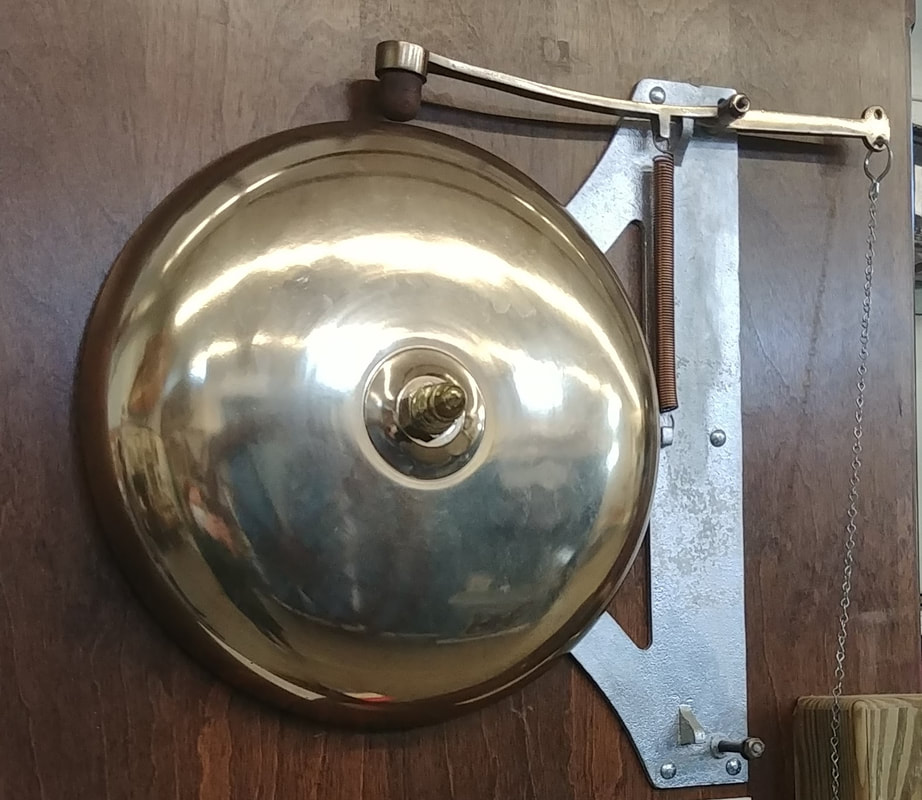
On display in the museum's East Gallery - Engine room gong from a steamboat or ferryboat owned by the Homer Ramsdell Transportation Company, Newburgh, c. 1900. Gift of the Homer Ramsdell family, Hudson River Maritime Museum Collection.
Today's Featured Artifact is this beautiful brass engine room gong, once found on a steamboat owned by the Homer Ramsdell Transportation Company, based in Newburgh.
Most steamboats and many diesel tugs were known as "bell boats," meaning the captain or pilot and the engineers communicated by a system of bells. Up in the wheelhouse, the pilot could only control the direction of the boat, with the pilot's wheel. If he wanted to change direction or speed, he had to communicate with the engineers down in the engine room. Imagine driving a car where one person is steering, and another person, who cannot see the road, is controlling the gas pedal and brakes. Thankfully, most boats are not as fast or maneuverable as a car, but the changes still had to be quickly executed to ensure safe and smooth operation of the boat. The larger, louder bell, called a "gong," signaled a change in direction. Smaller bells, called "jingles," usually signaled a change in speed. Controls in the pilot house were connected to the bells in the engine room, making them ring. Many transportation companies had their own code, although New York Harbor had a code shared by many boats. In this sound clip, collected by steamboat sound recording enthusiast Conrad Milster, we can hear the gong and jingle aboard the Newburgh ferryboat Dutchess.
Here are some examples of simplified bell signals, to give you an idea of how the system would work.
When the steamboat was stopped:
When working ahead or backing (moving forwards or backwards):
Jingles to change speed:
Signals could also be combined. For example, when stopped:
Mystic Seaport operates a historic steamboat that still uses the bell and jingle system. In this video, the captain of the Sabino explains how he and the engineer communicate. The video includes great footage from the engine room as well.
You can visit the museum's engine room gong, which is on permanent display in the East Gallery, along with many other fascinating maritime artifacts, at the Hudson River Maritime Museum. We hope to see you soon!
If you enjoyed this post and would like to support more history blog content, please make a donation to the Hudson River Maritime Museum or become a member today!
0 Comments
Your comment will be posted after it is approved.
Leave a Reply. |
AuthorThis blog is written by Hudson River Maritime Museum staff, volunteers and guest contributors. Archives
July 2024
Categories
All
|
 RSS Feed